 HY
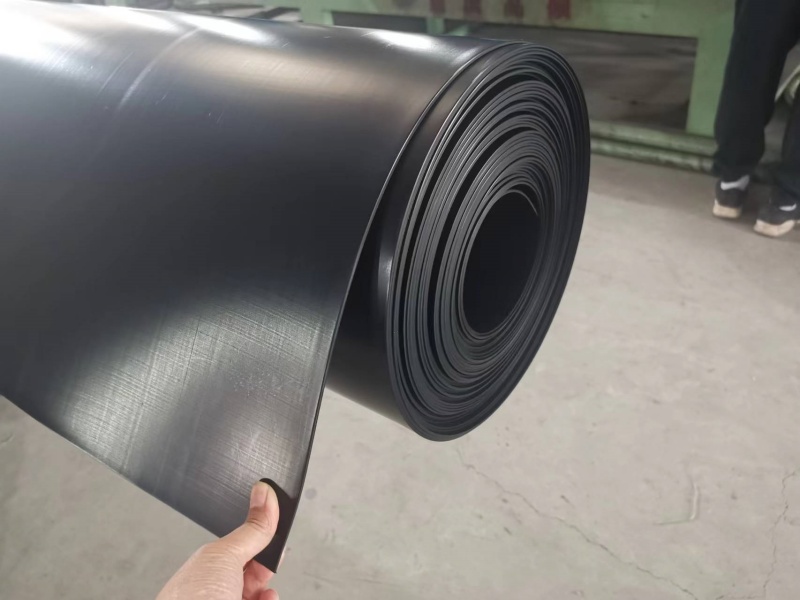
HYHDPE liner for aquaculture ponds, biogas digesters and water storage, 0.3–3.0 mm. Black membrane absorbs heat to raise digester temperature while providing reliable containment.
Manufacturer: Shandong Hengyang New Materials Co., Ltd. | Standards as cited belowOverview
- Standard
- GB/T 17643-2025
- Thickness
- 0.3–3.0 mm (common 0.5–1.5 mm for ponds)
- Width
- 2–8 m
- Colour
- Black (heat-absorbing, UV-stabilised)
- Surface
- Smooth (typical for ponds)
About Impermeable Pond Liner
Impermeable pond liner is the same HDPE barrier material marketed for pond and tank applications. In aquaculture it retains water, allows thorough pond cleaning and prevents cross-contamination between ponds; in covered digesters the black membrane both seals biogas and absorbs solar heat to improve fermentation efficiency.
Thickness depends on water depth, subgrade condition and maintenance method. Where the subgrade contains sharp particles a geotextile cushion layer is added beneath the liner to protect it from puncture.
Key Specifications
- Standard
- GB/T 17643-2025
- Thickness
- 0.3–3.0 mm (common 0.5–1.5 mm for ponds)
- Width
- 2–8 m
- Colour
- Black (heat-absorbing, UV-stabilised)
- Surface
- Smooth (typical for ponds)
Typical Applications
Fish, shrimp and lotus ponds
Covered anaerobic biogas digesters
Irrigation and storage ponds
Oxidation ponds and septic tanks
Decorative water features
Frequently Asked Questions
What thickness for an aquaculture pond?
Commonly 0.5–1.0 mm. Use the upper range for deeper ponds, mechanical cleaning, or subgrades containing stones; add a geotextile cushion where the base is rough.
Why black membrane for biogas digesters?
Black membrane absorbs solar heat, raising digester temperature and biogas yield, and—with adequate carbon black—offers better UV resistance for the exposed gas cover.
Enquiry | Impermeable Pond Liner
Send your specification, quantity, required standard and destination to receive selection advice and a quotation. Samples and mill test reports available.